Wednesday, April 4, 2012

Texture


·      Texture refers to how many different layers of sound are heard at once, to what kind of layers they are, and to how they are related to each other.  The three common types of textures are Monophonic, Polyphonic, and Homophonic.  Monophonic is a single melodic line without accompaniment.  Polyphonic is the simultaneous performance of two or more melodic lines of relatively equal interest.  Homophonic is when you hear one melody accompanied by chords.
·      In the band Gwendal, uses a homophonic texture throughout the piece.  It starts off with the flute playing the melody, while the acoustic guitar plays the chords.  Then the violin comes in with the same part as the flute at 0:59.  The bass guitar comes in at the same time helping the acoustic guitar.  The piccolo comes in at 1:19 with the same melody.  This is called imitation since an instrument comes and plays the same notes as the other instruments.  Imitation occurs when a melodic idea is presented by one voice or instrument and is then restated immediately by another voice or instrument.  These additions make the piece sound full and lively. 
·      The traditional Mongolian piece by the Khatan Ekh Ensemble.  This particular piece is homophonic and polyphonic.  When the time signature changes, the texture changes as well.  The piece starts off with most of the instruments present: Morin Khuur, Mongolian Xylophone, Yatga, Ikh Khuur, and the Limbe.  The Morin Khuur and the Limbe have the melody.  They play the same parts.  The Mongolian Xylophone, Yatga, and Ikh Khuur play the harmony.   At 2:05 the Yatga has the melody and the Morin Khuur has the harmony. Then all the other instruments come in for the harmony.  This lasts until 2:20.  Then it goes back to being Homophonic with the Morin Khuur and the Limbe playing the melody and the Mongolian Xylophone, Yatga, and Ikh Khuur playing the harmony. 
·      The comparisons between the pieces are that both have homophonic textures.  The only difference is that the traditional Mongolian piece changes texture to polyphonic and changes back to homophonic.  

Instrumentation


·      Both use String instruments and wind instruments
·      All of the Mongolian instruments represent Asian music.
·      Irish instrumentation-represents Western music—flute, violin, piccolo.
·      Some of the Mongolian instruments are similar to the Western instruments.
§  Limbe is a similar Aero phone like a Flute
§  Ikh Khuur looks similar to a Double Bass.  But the Ikh Khuur has more of a trapezoid shape.
§  Morin Khuur is a mixture of a cello and a violin.  There are only two strings on the instrument and its shape is also like a trapezoid.
§  Mongolian Xylophone is like a Western Xylophone.  The difference between the two is that the Mongolian Xylophone is crafted with Mongolian art cultures.

Instrumentation


Instrumentation for Irish
·      Flute
§  Used during Baroque period
§  Classical


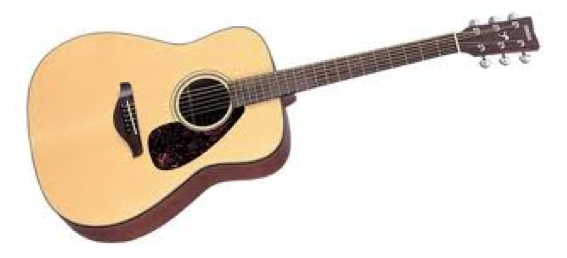
Acoustic Guitar


   Violin
 Renaissance
  Baroque
  Classical


Bass Guitar


Piccolo


Instrumentation

Mongolian:
  •   Morin Khuur or also known as the Horse-Fiddle

§  2 stringed insrument
§  used to play polyphonic melodies. 
§  Imitates noises of a horse

 Mongolian Xylophone


·      Yatga-
§  Half-tube Zither
§  Plucked string instrument


·      Ikh Khuur-
§  Its similar to a double bass
§  Shape is like a trapezoid


  Limbe is a Aero phone instrument, usually used for accompaniment
An Aero phone is a wind instrument


Mongolian Traditional Music


Mongolian Traditional Music:
Khatan Ekh Ensemble
·      This is ensemble plays traditional Mongolian music.  In this particular song they performed it at the Nadaam Festival in Mongolia.
         Traditional Mongolian Music:
·      This music has been existing since the 13th Century under the rule of Gengis Khan with Turkish tribes.
·      This type of music has been influenced by many tribes.  An example of a tribe would be a Turkish tribe.  

Tuesday, April 3, 2012

Irish Folk Music and Background of the band Gwendal


 Irish Folk Music: This has been around since the 18th Century.
  The style of Irish Folk music uses ornamentation, variation in melodic and rhythmic patterns, phrasing and articulation.
Background of the band Gwendal:
Melodic Influences by Jazz, rock n roll
Jean-Marie Renard-brings 5 different musicians to form a band—with their musical influences of traditional, jazz, folk, and rock 'n' roll
Began with 5 members then in 1989 with the album “Glen River”—became 6
This song is in the style of a Celtic Irish Folk Music
The members of this band consist of:
·      Youenn Le Berre on the Flutes
·      Jean-Claude Phillippe on the Violin
·      Ludoe Mesnil on the Acoustic Guitar
·      Jerome Guenguen on the Keyboards
·      David Rusaouen on the drums


Introduction

Introduction:      Does Irish Folk Music and Traditional Mongolian Music sound similar?  
Well, in order to determine whether they do sound similar, I will analyze the similarities and differences.  In order to determine the similarities and differences, I will investigate the compositional features in both pieces.  The compositional features will include duration, pitch, tone color, texture, dynamics, and form.  I will focus on one pair of an Irish Folk song to a Traditional Mongolian song.   These groups are from two different cultures, one from the East and the other from the West.  The Mongolian Traditional Music is from the East, while the Irish Folk Music is from the West.   The Irish Folk song I chose is called Steren by a band called Gwendal.  The Traditional Mongolian song comes from the group called Khatan Ekh Ensemble.